

How I manage my clients so they don’t take over my life
On setting and maintaining boundaries as a former workaholic.

Up until a few years ago, I willingly let my job take over my life.
Actually, “let” isn’t the right verb. I pursued it. Sought it out. Asked for more work. I loved responding to 8 pm emails. I have fond memories of Saturday mornings in bed on my laptop, texting with my manager.
If my mindset sounds unhealthy and toxic, trust your instincts.
This mode of operating stopped serving me during my last full-time job. But as luck would have it, I was in an environment that wanted more sacrifice than I was willing to give.
My desire for better balance has driven my shift to self-employment. When I left my 9-5 for a fractional gig last year, I expected the boundaries to set themselves. They didn’t. I got late-night Slack messages and meeting invites at all hours, even though I wasn’t a full-time employee.
Quickly, I realized I needed to take matters into my own hands. I ignored my instinct to be responsive 24/7 and rearrange my schedule to make meetings work. The first few weeks were excruciatingly uncomfortable. I felt like I was misbehaving and prepared myself to be scolded, like a child.
Fortunately, the scolding never came. My meeting declines and message delays were never met with anger or disappointment. What my brain clocked as boundary violations were actually far less nefarious. I was working for a high-stress founder balancing CEO duties with parenting and other responsibilities. His 7 am messages had nothing to do with me, and everything to do with him.
I’ve worked with over 10 clients in the last year. Not one of them has reacted to the boundaries I’ve set. I share that because I think many of us make a bigger deal of this stuff in our heads than it actually is.
That doesn’t mean it’s easy, especially if it’s a departure from your natural style. Today, I’m going to walk you through the five practices I use to set boundaries with my clients up front, and then a few scenarios where those boundaries got tested, and exactly how I handled each one.
If your clients are running your life, I hope a few of these help you reclaim some of your time and energy.


Part 1: Setting expectations and positioning yourself as a leader
Lead from the very first conversation
You need to show up as a leader from the very first conversation, even if you know the other party is older/more experienced/more accomplished than you. This is where you set the tone. Show up with an agenda, an elevator pitch about yourself, and a bunch of questions to learn more about the business. Do not bring I’m so grateful for this interview energy.
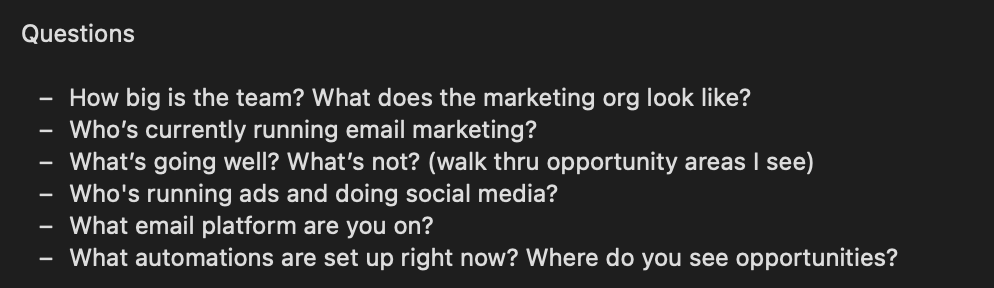
A very rough list of questions I’ve brought to a potential email marketing client. This doesn’t need to be super extensive — I simply think through what I want to know to determine whether I might be helpful.
Define a clear scope in writing
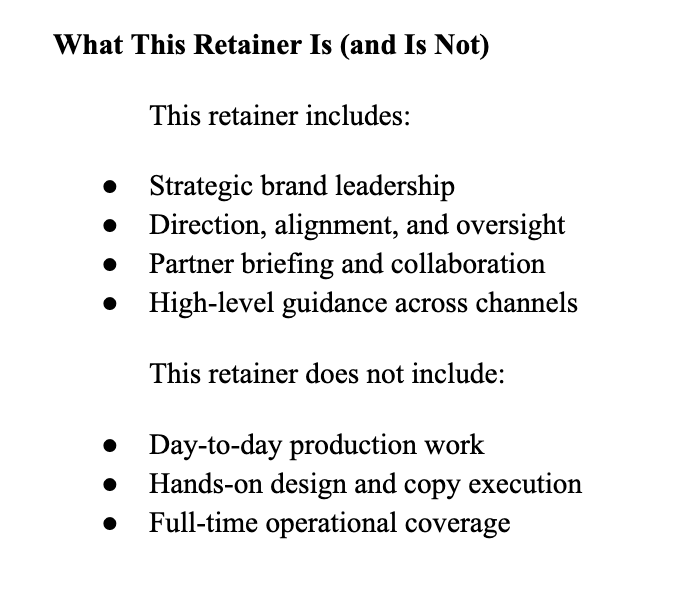
Scope creep is real. Your contract is your best chance to protect yourself from it. I think about this in two ways. First, you need a clear SOW (scope of work) that outlines exactly what you’ll be responsible for and what you won’t be responsible for. Here’s a screengrab from one of my recent contracts below as an example. Keep in mind that “this retainer includes” is only a high-level snapshot — my scope is much more detailed and ties deliverables to a timeline.
I would also urge you to attach your retainer contracts to a maximum number of hours per week or month. This is helpful if your work is expanding beyond the time you’re being paid for, not just beyond the scope you agreed to.
Onboard them properly
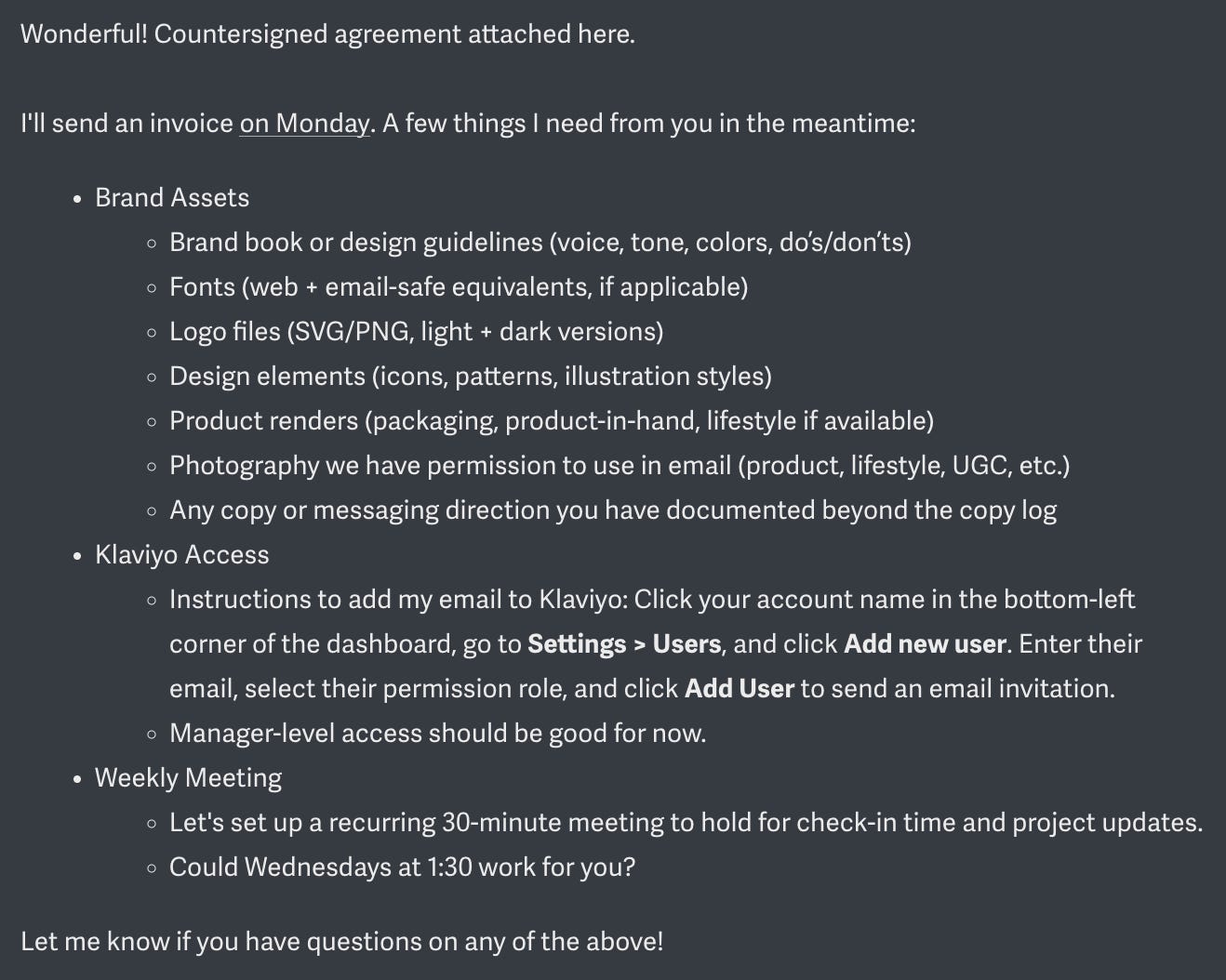
Onboarding is another opportunity to take the lead. The more confident they are in you, the less they’ll feel the need to follow up. Walk them through your timelines, process, communication norms, and check-in cadence up front. Send the recurring calendar invite yourself.
Example email I sent to a new client below right after we signed our contract:
Set communication norms and stick to them
Regular face time with my clients helps our workflow and communication. I meet with most of my retainer clients weekly, but there are exceptions. I meet with one multiple times per week since I’m more embedded in the team, and I meet with another once per month since my deliverables are much more turnkey. I’ve found that these recurring touchpoints are often what keeps our relationship from devolving into scattered emails and Slack messages.
Speaking of email and Slack… my rule of thumb is that I’ll join a client’s Slack if I’m on retainer for 5+ hours per week. I’m sticking to email for anything less than that or anything project-based, and have started to put it in my contracts, too.
Run your meetings and come prepared
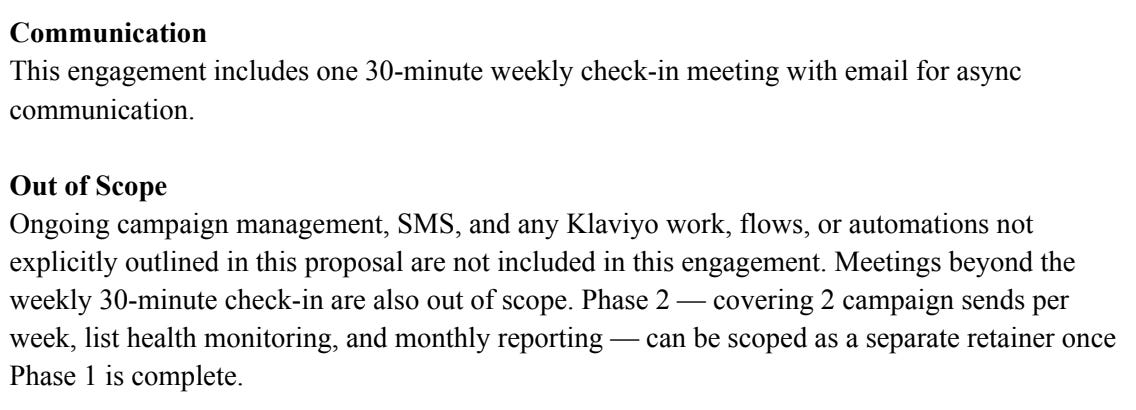
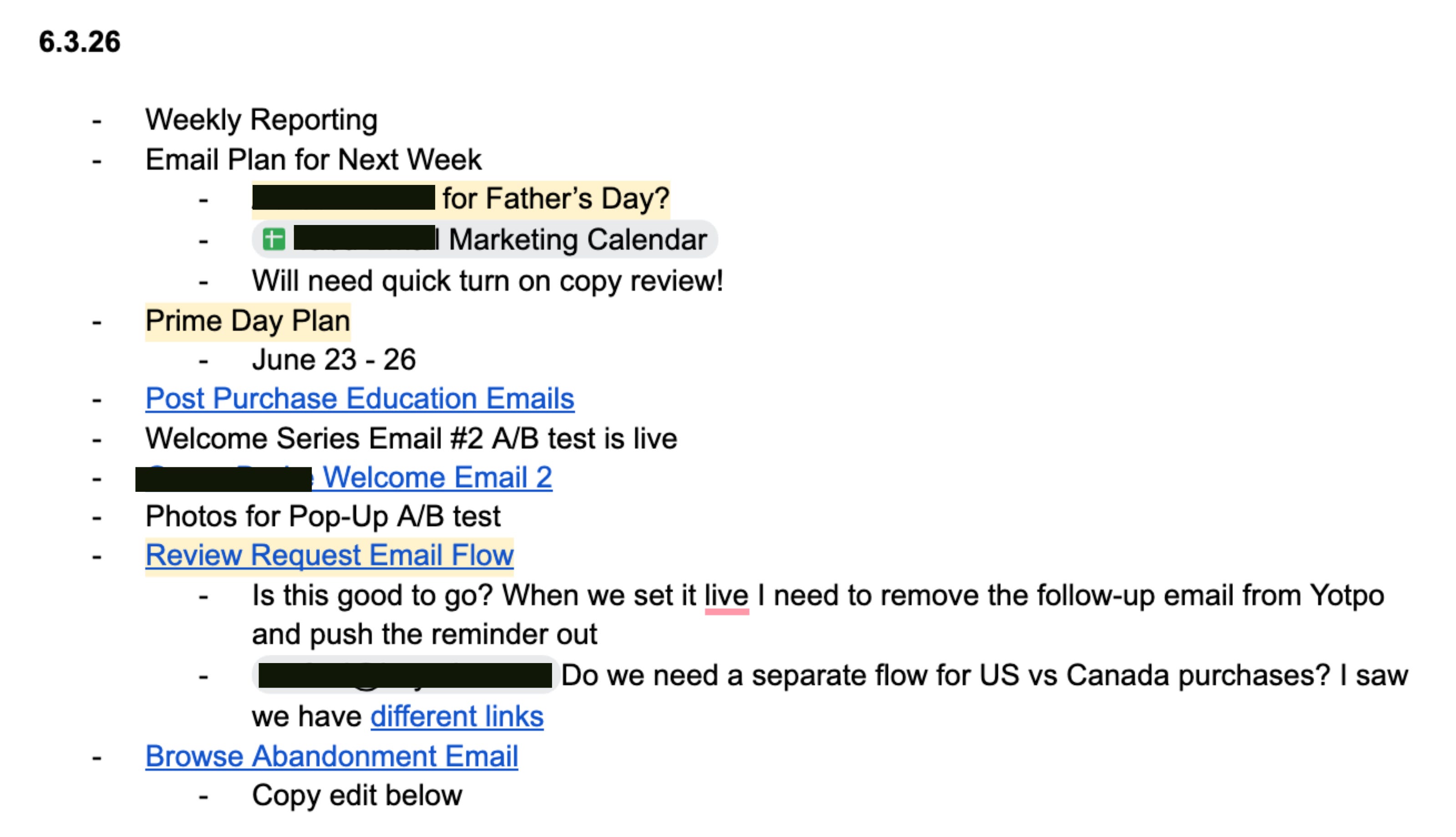
Continue to show up as a leader by running your meetings. I prep an agenda for every single check-in call. Depending on the client, it can range from a list of updates and discussion topics to something more structured, like the below. With this email client, we always review weekly reporting first, then move into discussion items and a list of things or questions I need from them.
Below the paywall are three moments when clients tested my boundary, along with the exact way I respond to each — including a screenshot of me politely turning down a last-minute meeting. If you’ve ever resentfully answered a client’s email at 9 pm, this is for you.